
Virtual Media Folders AI Organizer
AI-powered media organization add-on for the Virtual Media Folders plugin. Uses vision-capable AI models to analyze actual image content and automatically organize your media library into virtual folders.
Features
Section titled “Features”- Vision-Based AI Analysis: Analyzes actual image content (objects, scenes, colors) - not just metadata
- Multiple AI Providers: OpenAI/Azure, Anthropic Claude, Google Gemini, Ollama, Grok, Exo
- v1.3.0 adds support for WordPress Core AI provider (WP 7.0+ AI Client) as a first-class provider option. Seamlessly integrates any AI provider registered with the WordPress AI Client, with automatic detection and configuration links. For example, install AI Provider for Azure OpenAI to use Azure-hosted models via the Connectors page.
- Tested with the providers I have access to: Azure OpenAI (gpt-4.1) and Ollama (llama3.2-vision:latest)
- Automatic File Handling: Documents go to “Documents”, videos go to “Videos” - no AI needed
- Three Scan Modes:
- Organize Unassigned: Only process media not already in a folder
- Re-analyze All: Re-analyze all media and update assignments
- Reorganize All: Remove all folders and rebuild from scratch
- Preview Mode: Dry-run to see proposed changes before applying
- Backup & Restore: Automatic backup before reorganization with one-click restore
- Background Processing: Uses Action Scheduler for efficient chunked processing
- Real-time Progress: Live progress updates in the admin UI
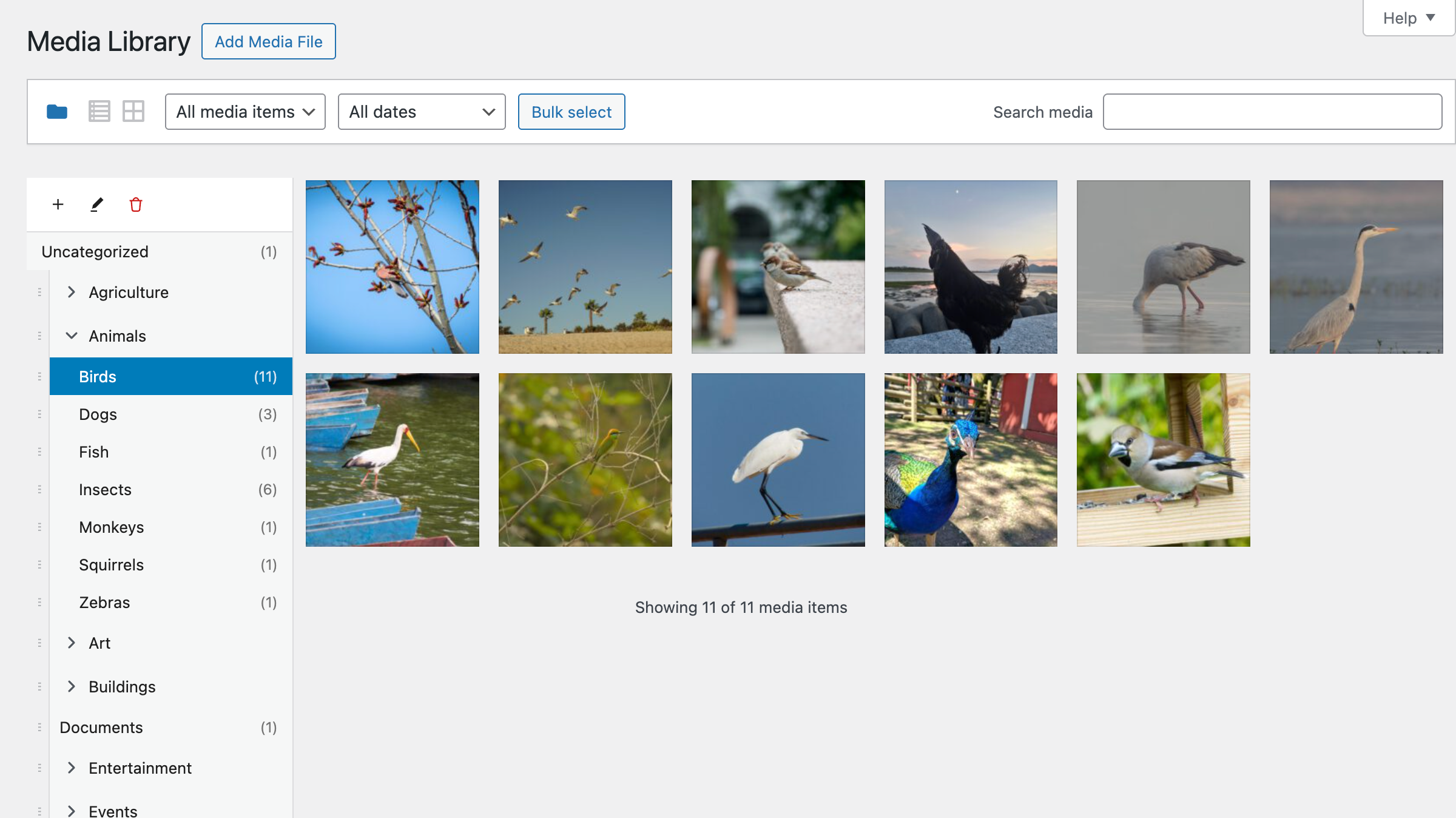
Watch: See how Virtual Media Folders AI Organizer brings order to your media library chaos.
Documentation
Section titled “Documentation”- AI Provider Guide - Detailed guide on choosing and configuring AI providers.
- WP-CLI Commands - Command-line interface for automation and scripting.
Requirements
Section titled “Requirements”- WordPress 6.8+
- PHP 8.3+
- Virtual Media Folders plugin
Installation
Section titled “Installation”Recommended: Use the Add-On Manager to install the add-on.
Manual installation:
- Download
vmfa-ai-organizer.zip - Upload via
Plugins → Add New → Upload Plugin - Activate via
WordPress Admin → Plugins
Plugin updates are handled automatically via GitHub. No need to manually download and install updates.
Configuration
Section titled “Configuration”Navigate to Media → AI Organizer to configure:
Media Scanner Tab
Section titled “Media Scanner Tab”Use this tab to scan and organize your media library. See scan modes and preview options.
Settings Tab
Section titled “Settings Tab”- Max Folder Depth: Limit folder hierarchy depth (1-5)
- Allow New Folders: Enable AI to suggest new folder structures
- Batch Size: Number of items to process per batch
AI Provider Tab
Section titled “AI Provider Tab”Configure your AI provider for image analysis. See the AI Provider Guide for detailed setup instructions, model recommendations, and cost comparison.
Configuration Priority
Section titled “Configuration Priority”Settings are resolved in this order:
- PHP Constants (e.g.,
VMFA_AI_OPENAI_KEY) - Environment Variables (e.g.,
VMFA_AI_OPENAI_KEY) - Database Options (Settings page)
- Default Values
Environment Variables / Constants
Section titled “Environment Variables / Constants”// Provider Selection// Options: 'wordpress', 'openai', 'anthropic', 'gemini', 'ollama', 'grok', 'exo'define( 'VMFA_AI_PROVIDER', 'openai' );
// WordPress AI (Core) — WP 7.0+ recommended// No API key constants needed. Configure your connector in Settings → Connectors.// Example: install AI Provider for Azure OpenAI, then set:// define( 'VMFA_AI_PROVIDER', 'wordpress' );
// OpenAI / Azure OpenAIdefine( 'VMFA_AI_OPENAI_TYPE', 'openai' ); // 'openai' or 'azure'define( 'VMFA_AI_OPENAI_KEY', 'sk-...' );define( 'VMFA_AI_OPENAI_MODEL', 'gpt-4o-mini' );define( 'VMFA_AI_AZURE_ENDPOINT', 'https://your-resource.openai.azure.com' );define( 'VMFA_AI_AZURE_API_VERSION', '2024-02-15-preview' );
// Anthropic Claudedefine( 'VMFA_AI_ANTHROPIC_KEY', 'sk-ant-...' );define( 'VMFA_AI_ANTHROPIC_MODEL', 'claude-3-haiku-20240307' );
// Google Geminidefine( 'VMFA_AI_GEMINI_KEY', '...' );define( 'VMFA_AI_GEMINI_MODEL', 'gemini-1.5-flash' );
// Grok (xAI)define( 'VMFA_AI_GROK_KEY', '...' );define( 'VMFA_AI_GROK_MODEL', 'grok-beta' );
// Ollama (Local) - Use a vision-capable model for image analysisdefine( 'VMFA_AI_OLLAMA_URL', 'http://localhost:11434' );define( 'VMFA_AI_OLLAMA_MODEL', 'llama3.2-vision:latest' );
// Exo (Distributed Local)define( 'VMFA_AI_EXO_ENDPOINT', 'http://localhost:52415' );define( 'VMFA_AI_EXO_MODEL', 'llama-3.2-3b' );
// Organization Settingsdefine( 'VMFA_AI_MAX_FOLDER_DEPTH', 3 );define( 'VMFA_AI_ALLOW_NEW_FOLDERS', true );define( 'VMFA_AI_BATCH_SIZE', 20 );Vision API Support
Section titled “Vision API Support”The plugin uses vision-capable AI models to analyze actual image content. When processing images, the AI receives:
- Image Content (primary): The actual visual content of the image
- EXIF/Metadata: Camera info, date taken, GPS location, keywords
- Text metadata: Title, alt text, caption, description
- Filename: As a last resort hint
Supported image formats: JPEG, PNG, GIF, WebP (max 10MB per image).
For detailed information about supported AI providers and vision-capable models, see the AI Provider Guide.
Development
Section titled “Development”For development setup, testing, REST API endpoints, and hooks documentation, see the Development Guide.
License
Section titled “License”Virtual Media Folders AI Organizer is free software licensed under the GPL v2 or later.
Copyright 2025 Per Soderlind
📦 Source: soderlind/vmfa-ai-organizer · Edit on GitHub